
Improve EPC rating rental property: the fabric-first ladder for landlords
To improve EPC rating rental property owners should start with the building, not the boiler. The government's new certificate puts fabric performance first. This guide gives a ladder of measures in a sensible order, explains why the order matters and links each rung to its own page.
Published 21 October 2026. Last updated: 21 October 2026. Reviewed by Yasir Khan, Retrofit Coordinator at LAMTANS Engineering.
Law status, checked 21 October 2026: the EPC C by 1 October 2030 rule is confirmed government policy, not yet law. The 2015 minimum of EPC E is the law in force today.
Why fabric comes first on the new EPC
The new certificate will report four things: energy cost, fabric performance, heating system efficiency and smart readiness. Fabric performance is the primary standard. It covers walls, roof, floor and windows.
A fabric first retrofit follows that logic. After fabric, you meet either the heating standard or the smart readiness standard. A heat pump on a leaky house does not fix the first test. Our EPC C 2030 guide explains the rule.
The numeric thresholds are not yet published. So we do not promise points for any measure. An assessor models your property instead.
The measure ladder: EPC improvement measures in order
Work from the top. Each rung is cheaper or simpler than the one below it, and later rungs work better once earlier ones are done.
| Step | Measure | Why it sits here |
|---|---|---|
| 1 | Assessment and ventilation check | A plan stops wasted spend and spots damp risk |
| 2 | Draught-proofing | Low cost, little disruption |
| 3 | Loft insulation | Often the cheapest large heat loss to fix |
| 4 | Cavity wall insulation | Large saving where the wall has a cavity |
| 5 | Roof, room-in-roof and floor | Fills gaps the first steps leave |
| 6 | Heating controls and hot water | Improves the heating score at modest cost |
| 7 | Solid wall insulation | Costly, so decided after the cheaper steps |
| 8 | Windows and doors | Rarely the best value for the rating |
| 9 | Heat pump, solar and battery | Best on a home that already holds its heat |
Each rung has its own page:
- Draught-proofing
- Loft insulation
- Cavity wall insulation
- Roof insulation
- Controls and hot water
- Solid wall insulation
- Windows and doors
- Heat pumps
This ladder is our retrofit advice, built on the government's fabric-first design. Your assessor may reorder it for your house.
Cheapest ways to improve EPC rating: steps 2 to 4
The first rungs are where most landlords start. They are also the quickest to finish between tenancies.
Draught-proofing and loft
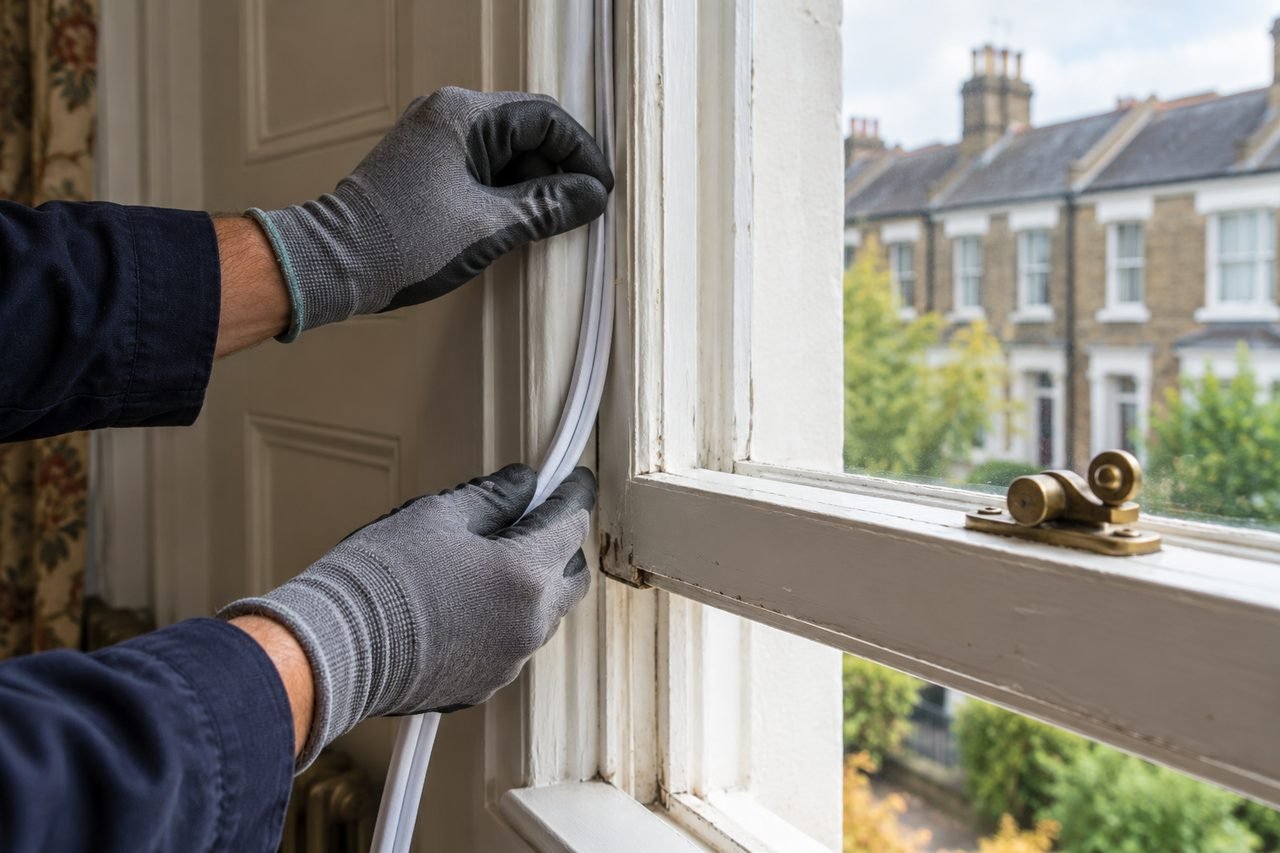
Seal gaps around doors, windows and loft hatches. Then check the loft. Measure the depth of insulation you have before asking for quotes. A loft with little or none is a straightforward job.
Cavity walls
Many homes built from about the 1920s have a cavity. A suitability check looks at the cavity width, the brickwork and exposure to driving rain. Filling it cuts heat loss from the largest surface of the house.
Harder measures: walls, floors and roofs
Some homes need more. Victorian terraces usually have solid walls with no cavity. Wall insulation there costs far more and needs careful design.
The government has confirmed a solid wall insulation exemption. A landlord can record a decision not to install it where it is the only measure left against the fabric standard. Try the cheaper steps first. Then decide.
Floors and roofs vary a lot. Suspended timber floors, flat roofs and room-in-roof spaces each need a survey. See floor and basement insulation for floors.
Heating, controls and smart measures
Once the fabric is sound, look at heating. Controls and hot water cylinder insulation are simple. A heat pump suits a home that holds its heat. The Boiler Upgrade Scheme pays £7,500 towards an air source heat pump, but its funding does not count towards the £10,000 cap. We check whether your rented home qualifies before you apply.
Solar panels and batteries can help the smart readiness route. They are not a substitute for insulation.
Protect the building: damp, mould and ventilation
Insulating a damp house can make problems worse. Check for damp and ventilation first. Good ventilation matters more once the house is airtight. Our damp, mould and ventilation page explains the checks.
Ask your installer how they will check ventilation and damp risk before insulating. LAMTANS Engineering Ltd holds PAS 2035 and PAS 2030. Check the registers yourself: TrustMark, RECC, ICO, Gas Safe Register and Simply Certification.
How to raise EPC rating: practical steps and EPC recommendations
Follow this order for each property.
- Find the current certificate and note the band, the date and the EPC recommendations on it.
- Check the details on it are right. If not, see how to challenge an EPC.
- Book an assessment, and ask for the plan in fabric-first order.
- Plan the work between lets so you avoid disruption.
- Keep invoices and certificates. Spend since 1 October 2025 can count towards the cap.
- Commission an EPC after the work. A new EPC can come out lower, so do not assume a better result.
Only an accredited domestic energy assessor can lodge a certificate. Your own checks are evidence, not a certificate.
How much will it cost, and can a grant help?
Costs depend on your starting band and home type. Our cost of reaching EPC C guide shows the published averages. In Greater Manchester, the Warm Homes: Local Grant may pay for many fabric measures in a qualifying property. See grants for landlords.
Our adviser tip, from a Retrofit Coordinator: read the recommendations on your current certificate, then ignore the order they appear in. Ask the assessor to rank them by effect on fabric first, then by cost.
Who we are
Compliant Lets is a trading name of LAMTANS Holdings Ltd. Retrofit work is delivered by LAMTANS Engineering Ltd.
Book a free retrofit assessment
Sources
- GOV.UK: Improving the energy performance of privately rented homes, government response, checked 21 October 2026
- GMCA: Warm Homes Local Grant, privately rented scheme, checked 21 October 2026
- Energy Saving Trust: Boiler Upgrade Scheme, checked 21 October 2026
- GOV.UK: Domestic private rented property minimum standard, landlord guidance, checked 21 October 2026
Designed & developed by LAMTANS Technologies LLC, USA — part of the LAMTANS Group
Frequently asked questions
What is the quickest way to improve an EPC rating?
Draught-proofing and loft insulation are usually the quickest. They are low cost and cause little disruption. An assessment confirms what your property needs.
Should I replace the boiler first?
Usually not. The new EPC puts fabric performance first. A new heating system on a poorly insulated house does not meet the primary standard. Insulate first, then review heating.
How many points will each measure add?
We cannot say yet. The government has not published the numeric thresholds for the new EPC. An assessor can model your property and show the likely effect.
Can a new EPC come out lower?
Yes. A fresh assessment can pick up details the old one missed or used different data. Do not assume a new certificate will be higher.
Do I have to insulate solid walls?
Not necessarily. The government has confirmed an exemption for landlords who decide not to install solid wall insulation where it is the only measure left against the fabric standard.
Do tenants have to agree to the work?
Access is needed for surveys and works, so you will need your tenant's cooperation. If a tenant refuses consent, a third-party consent exemption may apply. Keep dated written requests.
Who can lodge a new EPC?
Only an accredited domestic energy assessor can lodge a certificate on the register. Be cautious of anyone offering to guarantee a higher rating.