
Underfloor and basement insulation: for landlords and owners
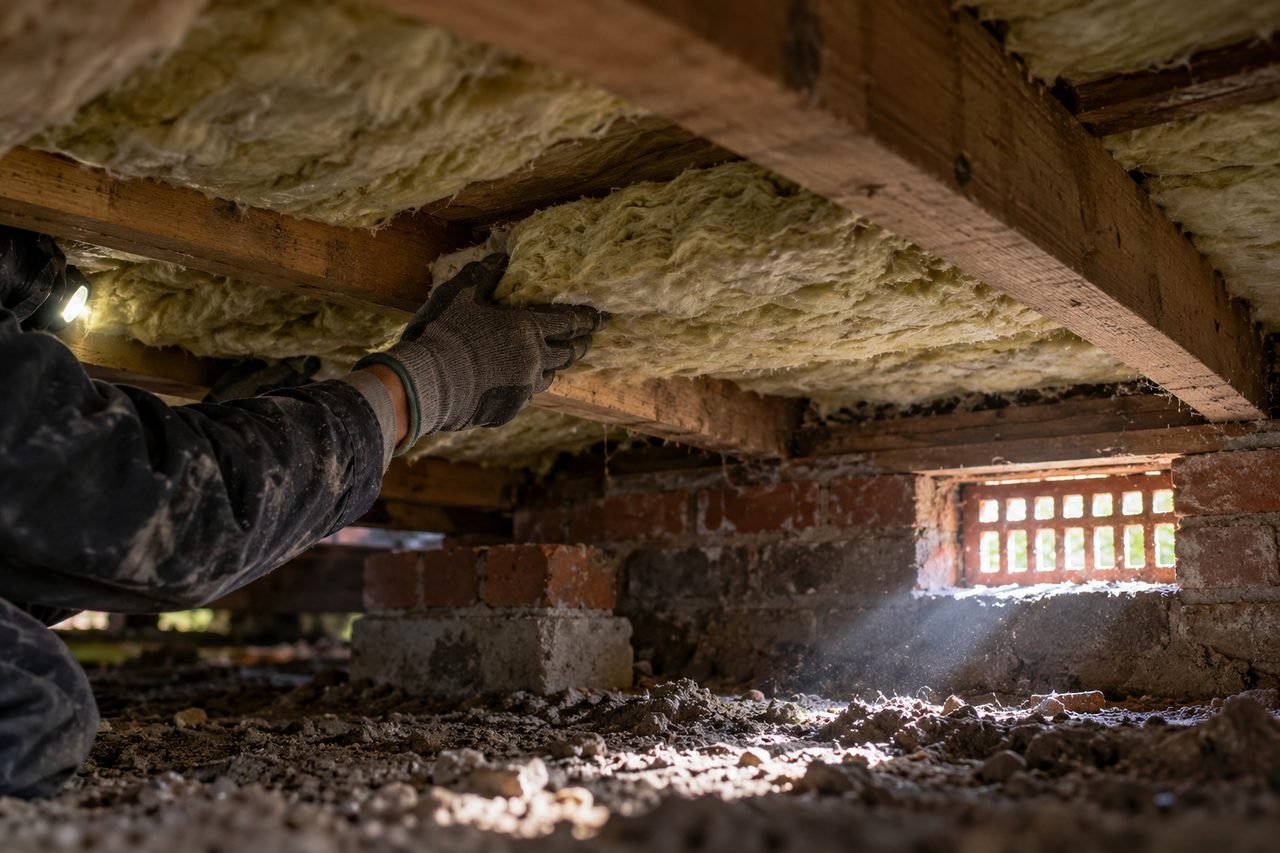
Underfloor and basement insulation stops heat draining through the ground floor of older rented homes. It is a less obvious measure than the loft, yet many Victorian and Edwardian houses need it. This page explains the floor types, the air brick rule, the cost and how funding applies.
Last checked: 21 October 2026.
Book a free retrofit assessment
Underfloor and basement insulation: which floor type do you have?
The floor type decides the method. The Energy Saving Trust describes two main types.
| Floor type | Typical age | Where insulation goes | Key point |
|---|---|---|---|
| Suspended timber | About 1850s to 1950s | Between the joists, under the floorboards | Air bricks must stay clear |
| Solid concrete | From about the 1950s | Under the slab or on top, with rigid boards | A raised floor can affect doors and sockets |
| Floor above a cellar | Varies | Underside of the floor, from the cellar | Often easier than lifting boards |
Source: Energy Saving Trust, page updated 19 May 2026, checked 21 October 2026.
Suspended timber floor insulation
Air bricks in the outside walls, just above ground level, are the usual sign of a suspended timber floor. Insulation is fitted between the joists. The installer either lifts the boards or works from below.
The Energy Saving Trust says this floor is common in Victorian and Edwardian homes. It is also the type where mistakes matter most, because the void under the boards needs airflow to keep the timber dry.
Solid floor insulation
Solid floors can be insulated under the concrete when the floor is replaced. Otherwise rigid boards go on top, covered with a new finish. The Energy Saving Trust says this costs considerably more than a suspended floor and raises the floor level.
For a rental, that rise can affect door bottoms, skirting and socket positions. We cover this at the survey so you are not surprised on site.
Cellar insulation: floors above an unheated basement
If the house has an unheated cellar or basement, insulating the floor above from below is often easier. Mineral wool can be held in place with netting, or rigid boards can be cut between the joists. A floor above an unheated space may benefit even though upper floors usually do not.
Cellars bring damp questions, and sealing a damp space can make things worse. See our damp, mould and ventilation guide for the checks made before anything is covered.
Why air bricks must stay open
Do not block air bricks. They ventilate the void beneath the floor and help prevent rot in boards and joists. Insulation changes how air and moisture move, so ventilation must be maintained.
The Energy Saving Trust also warns that gaps in the insulation can trap moisture. Plasterboard fitted under the joists can do the same if the timber is damp or airflow is poor.
How floor insulation affects an EPC
Insulating the floor trims fabric heat loss, the lead test on the new EPC. The 21 January 2026 response confirms this as policy, not yet law.
Bands are unpublished, so we name no point gains. An assessor models the house and reports back. Gappy floorboards are a different job, covered under draught-proofing.
Floor insulation cost
The Energy Saving Trust gives about £1,400 to £2,500 for a suspended floor, depending on house type and how easily the boards lift. It states annual savings of about £55 for an average house in Great Britain. These are guide figures, not our prices.
| Floor type | Our price from |
|---|---|
| Suspended timber floor | Indicative from £1,200, not a quote |
| Solid floor | Indicative from £2,000, not a quote |
The bill saving normally goes to the tenant. Your gain is a warmer home and a step towards EPC C. Spend since 1 October 2025 counts towards the £10,000 cap.
Grants for underfloor insulation in Greater Manchester
GMCA names floor insulation in the measures list for its Warm Homes: Local Grant. A landlord who supports the Good Landlord Charter and owns a D or E rated home let to an eligible household can apply. The first property is funded in full up to £15,000 for energy performance. Others are funded at half, up to £7,500.
GMCA states no end date. ECO4 ends on 31 December 2026. The grants for landlords guide has the full table. Source: GMCA, checked 21 October 2026.
How the process works
- Void inspection: an assessor looks under the boards at joists, air bricks and timber condition.
- Quote: a written recommendation and price follow.
- Fitting: our installer lays insulation and keeps every air path open.
- Evidence: photographs and certificates go into your files.
Who delivers the work
Compliant Lets is a trading name of LAMTANS Holdings Ltd. The work is delivered by LAMTANS Engineering Ltd, which holds PAS 2030, PAS 2035 and TrustMark. Check the registers yourself: TrustMark, RECC, ICO, Gas Safe Register and Simply Certification.
Adviser tip, from a Retrofit Coordinator: ask for photographs of the void before and after. They prove the insulation went in without gaps and that the air bricks stayed clear, which strengthens your records if a council or buyer ever asks what was done.
Sources
- Energy Saving Trust: Floor insulation, checked 21 October 2026
- GMCA: Warm Homes Local Grant, privately rented scheme, checked 21 October 2026
- GOV.UK: Improving the energy performance of privately rented homes, government response, checked 21 October 2026
Designed & developed by LAMTANS Technologies LLC, USA — part of the LAMTANS Group
Frequently asked questions
How do I know if I have a suspended timber floor?
Look for air bricks in the outside walls just above ground level. Houses from roughly the 1850s to 1950s often have them. Our assessor confirms this on site.
Will the floorboards have to come up?
Sometimes. Installers may work from below or lift boards, depending on access. We tell you which at the survey.
Is floor insulation worth it?
For many older homes it is a useful fabric measure, though savings per home are modest. The Energy Saving Trust cites about £55 a year for an average house.
Can insulation cause damp under the floor?
It can if air bricks are blocked, gaps trap moisture or the timber is already damp. That is why we check ventilation and timber condition first.
Is a solid floor harder to insulate?
Usually, yes. It costs more and may raise the floor level. Under-slab insulation is usually done when the floor is being replaced.
Should I insulate under the cellar ceiling?
If the cellar is unheated, insulating the floor above from below can help. Check the cellar is dry first.
Is there a grant for floor insulation in Manchester?
Possibly. Floor insulation is a named measure in the Warm Homes: Local Grant. Landlord, home and tenant must all qualify. ECO4 ends 31 December 2026.
Do I need the tenant to be out?
Usually not for work from below. Lifting boards disrupts rooms for a time. We agree access and timing with you and the tenant.
Does floor insulation count towards the cost cap?
Yes, if fitted since 1 October 2025. Third-party funding counts as well. Keep your invoices.