
Damp mould ventilation landlords can rely on: survey, fix, ventilate
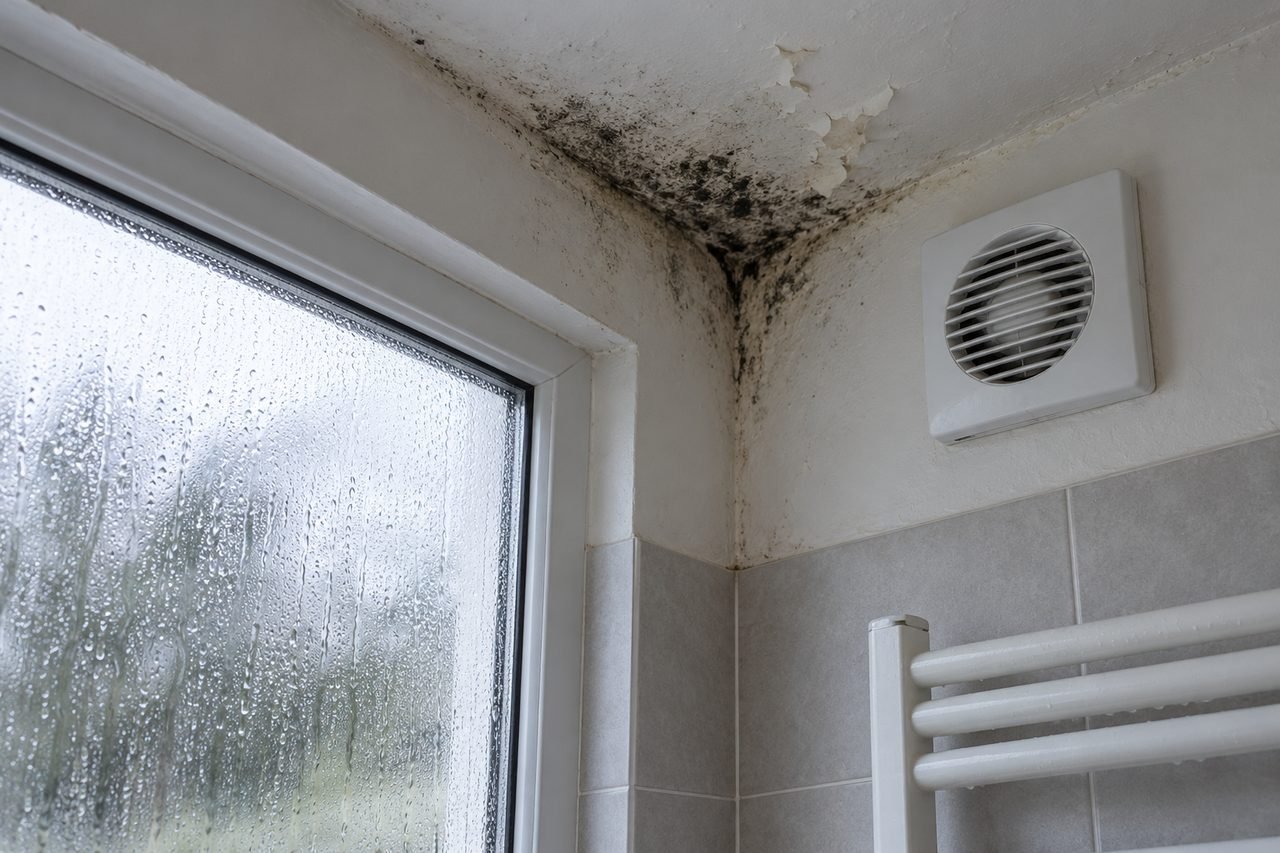
Damp mould ventilation landlords deal with is rarely three separate problems. Moisture, heat and airflow work together, and insulation changes all three. This page explains how to find the real cause, why insulating without ventilation backfires, and where Awaab's Law stands for private rentals today.
Last checked: 21 October 2026.
Book a free retrofit assessment
Damp mould ventilation landlords face: what causes it?
GOV.UK guidance lists four causes. Each needs a different fix, so a correct diagnosis comes first.
| Cause | What it is | Usual fix |
|---|---|---|
| Condensation | Indoor moisture settling on cold surfaces; the most common form | Ventilation, heating, insulation |
| Penetrating damp | Water entering through defects in walls, roofs, windows or floors | Repair the defect |
| Rising damp | Ground moisture rising through walls and floors; often misdiagnosed | Confirm by testing, then treat |
| Traumatic damp | Leaks, burst pipes, overflows or flood water | Repair and dry out |
Source: GOV.UK, damp and mould guidance for rented housing providers, checked 21 October 2026.
Your legal duty as a landlord
The same guidance says a landlord is legally responsible for dealing with damp and mould, whatever the type. The main laws are the Housing Act 2004, the Environmental Protection Act 1990 and the Homes (Fitness for Human Habitation) Act 2018. Status: In force.
Councils enforce the Housing Act 2004 and can use the Housing Health and Safety Rating System. Penalties can reach £30,000. The guidance adds that landlords should act promptly and do not need medical evidence first.
Awaab's Law and private rentals: where it stands
Awaab's Law is not yet in force for private landlords. The position at 21 October 2026 is below.
| Sector | Status | Detail |
|---|---|---|
| Social housing | In force | Took effect on 27 October 2025 for damp, mould and emergency hazards |
| Private rented sector | Proposed | Consultation runs 9 October to 18 December 2026; no start date set |
The consultation sets out proposals under powers in the Renters' Rights Act 2025. The starting points include:
- Investigate a significant hazard within 10 working days, with 5 and 15 days also asked about.
- Fix emergency hazards within 24 hours.
- Cover all Housing Health and Safety Rating System hazards except overcrowding. Damp and mould are on that list.
These are proposals and may change. We update this page when the government responds.
Why insulating without ventilation causes trouble
Government guidance warns that energy efficiency upgrades can reduce ventilation, so ventilation should be assessed alongside any insulation work. A sealed, insulated home holds more moisture. If it cannot escape, it condenses on the coldest surface.
Blocked eaves vents, covered airbricks and sealed trickle vents are the usual culprits. Poorly fitted wall insulation can also trap moisture in the wall. Read about solid wall insulation and draught-proofing before sealing a home.
Consultation respondents on the EPC rules said that current EPCs do not reference ventilation. That means an EPC alone will not warn you.
Extractor fans, trickle vents and ventilation upgrades
Kitchens and bathrooms need particular attention. Extractor fans must work, be cleaned and be serviced. Trickle vents should be left open. Where a home has neither, a ventilation upgrade may be needed.
Building Regulations also apply. GOV.UK says that when windows are replaced, a signed disclaimer from the owner is not a suitable way of complying with the ventilation rules. Our windows and doors guide covers this.
Damp proofing and timber treatment
Damp proofing starts with finding out whether the damp is real and what is causing it. GOV.UK says rising damp is often misdiagnosed and that testing is the most reliable check. Treating the wrong cause wastes money.
Timber treatment is for confirmed decay or infestation, after the source of moisture is fixed. We survey, record the cause and then recommend only what the evidence supports.
Mould in rental property: what to do about it
Removing surface mould does not stop it returning. GOV.UK guidance says to fix the root cause, photograph the mould before cleaning and keep records. Re-inspect at least six weeks after repairs.
The guidance also says that blaming damp on a tenant's lifestyle is unreasonable. Tenants cooking, bathing and drying clothes produce moisture. Your job is to give the home enough ventilation and heat to cope.
Grants and cost
The Warm Homes: Local Grant in Greater Manchester names insulation, draughtproofing and low-carbon heating measures. GMCA does not list ventilation or damp treatment by name, so we do not promise funding. Source: GMCA, checked 21 October 2026. See grants for landlords.
Indicative price from £800 for ventilation and from £600 for damp-proofing (UK market research, 2026). This is not a quote: your written quote after a survey is the confirmed price. You receive a written price after the survey.
How the process works
- Survey: a retrofit assessor checks moisture, heating, ventilation and structure.
- Diagnosis: you receive a written cause and a ranked list of fixes.
- Works: our installers carry out the repairs or ventilation upgrades.
- Follow-up: we advise a re-inspection about six weeks later.
Who delivers the work
Compliant Lets is a trading name of LAMTANS Holdings Ltd. The work is delivered by LAMTANS Engineering Ltd, which holds PAS 2030, PAS 2035 and TrustMark. Check the registers yourself: TrustMark, RECC, ICO, Gas Safe Register and Simply Certification.
Adviser tip, from a Retrofit Coordinator: ask for the ventilation check before the insulation quote, not after. Fixing airflow first is cheaper than reopening a finished job when mould appears, and it gives you a record that you assessed ventilation.
Sources
- GOV.UK: Understanding and addressing the health risks of damp and mould in the home, checked 21 October 2026
- GOV.UK: Extending Awaab's Law to private rented tenancies and to licences, checked 21 October 2026
- GOV.UK: Millions of tenants safe from black mould through Awaab's Law, checked 21 October 2026
- GOV.UK: Approved Document F volume 1, frequently asked questions, checked 21 October 2026
- GMCA: Warm Homes Local Grant, privately rented scheme, checked 21 October 2026
- GOV.UK: Improving the energy performance of privately rented homes, government response, checked 21 October 2026
Designed & developed by LAMTANS Technologies LLC, USA — part of the LAMTANS Group
Frequently asked questions
Is Awaab's Law in force for private landlords?
Not yet. It is proposed. A consultation runs from 9 October to 18 December 2026, and no start date is set. It is in force for social housing.
Who is responsible for damp and mould in a rental?
The landlord, according to GOV.UK guidance, whatever the type of damp. Councils can enforce this under the Housing Act 2004.
Can insulation cause mould?
Yes, if ventilation is blocked or damp is not fixed first. Government guidance says upgrades can reduce ventilation, so we assess both together.
Is condensation the tenant's fault?
GOV.UK guidance says blaming lifestyle is unreasonable. Cooking and bathing create moisture, and the home needs enough ventilation and heat to cope.
How do I tell condensation from rising damp?
Condensation settles on cold surfaces such as window frames and corners. Rising damp is often misdiagnosed, and testing is the most reliable check.
Do I need medical evidence before acting on mould?
No. GOV.UK guidance says medical evidence is not a requirement for action. Landlords should act promptly.
Will a new extractor fan solve it?
Sometimes. It helps where moisture comes from cooking and bathing. It will not fix a leak, so diagnose first.
When is timber treatment needed?
Only for confirmed decay or infestation, after the moisture source is fixed. A survey should record the cause first.
Does this affect my EPC?
Not directly. Fabric measures change the EPC. Ventilation is not referenced on current EPCs, so it needs separate attention.
Are there grants for damp or ventilation work?
GMCA does not name them among the Warm Homes: Local Grant measures. Insulation measures are named. Ask us to check your property.