
First-time central heating for landlords: choosing and installing it
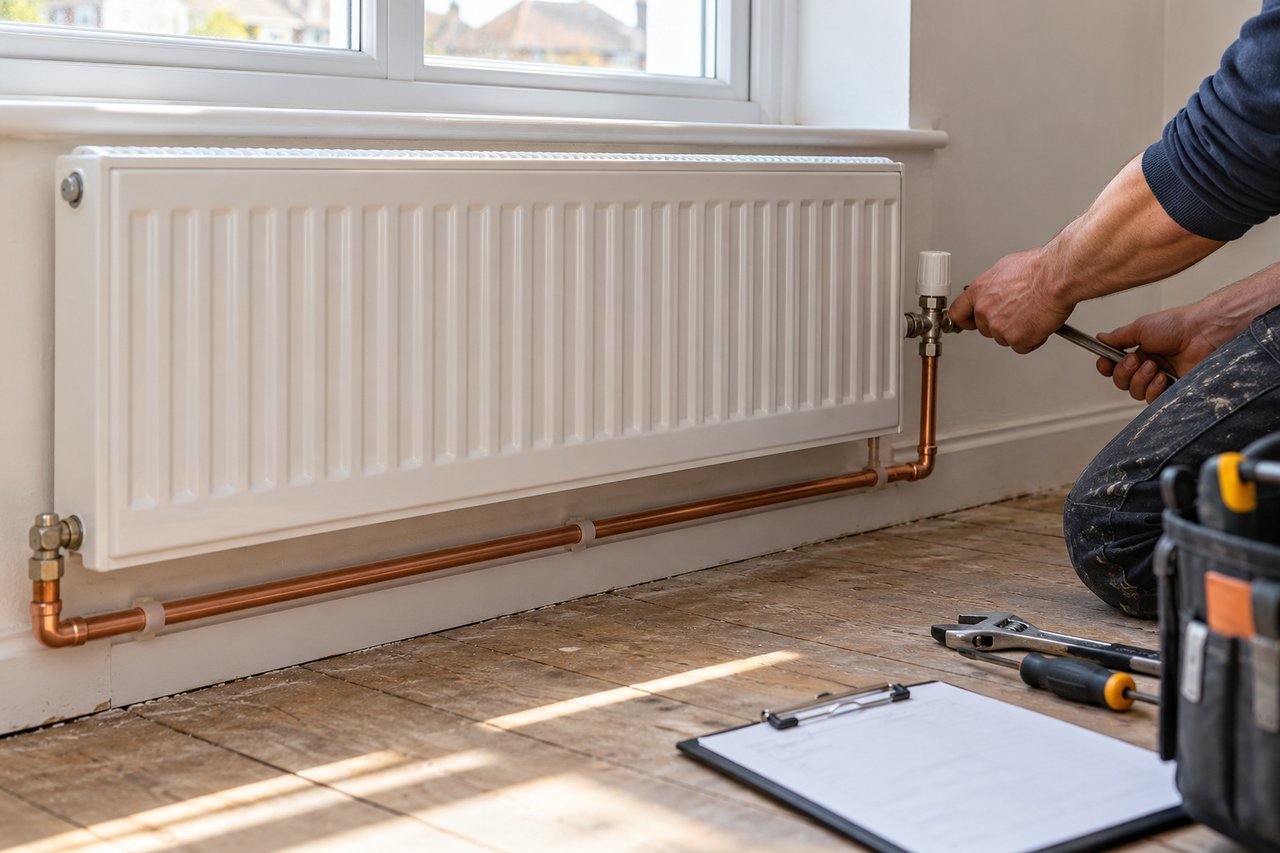
First-time central heating for landlords turns a cold, hard-to-let home into one that meets modern standards. This page compares the options, explains why heat loss sizing comes first, covers the legal risk of excess cold and describes how an install runs.
Last checked: 22 October 2026.
First-time central heating for landlords: why it matters
A rented home with no fixed heating can fail the housing health and safety standard. Excess cold is one of the hazards a council officer assesses. It can also leave the home hard to let and with a low EPC.
Fixed heating is not the same as a portable heater. A heating system should warm the main living areas and bedrooms and be controllable by the tenant.
Central heating for rented homes: the main options
Three routes are common. Each suits a different home and budget.
Gas wet system
A gas boiler, pipework and radiators. It needs a gas supply. If the street has gas but the home is not connected, the gas network operator arranges the new connection.
Electric heating
Electric radiators or storage heaters need no pipework or boiler. They are quicker to install but cost more to run per unit of heat.
Heat pump
An air source heat pump suits homes with good insulation. It needs a heat loss calculation and enough space outside. See our heat pumps page.
Gas or electric heating choice: how to decide
Start with the property. A flat with no gas supply or flue route may suit electric. A house on a gas street may suit a boiler. A well-insulated house may suit a heat pump.
Think about the tenant. Running costs affect rent affordability and complaints. A cheaper-to-run system is easier to let. Ask for estimated running costs for each option before deciding.
Radiator sizing and heat loss
Each room loses heat at a different rate. A proper design starts with a room-by-room heat loss calculation. It sets the radiator sizes and the boiler or heat pump output.
Oversized boilers waste fuel. Undersized radiators leave rooms cold. Insulate the roof, walls and draughts before you size the system, because better insulation means a smaller, cheaper system. Start with our loft insulation page and draught-proofing page.
Excess cold hazard: what councils look for
Council officers inspecting a rented home use the Housing Health and Safety Rating System. Cold homes with poor insulation and no adequate heating score badly. A hazard rating can lead to an improvement notice.
Fitting fixed heating and insulation removes the hazard and improves comfort at the same time.
How an install runs
- Survey and heat loss design.
- Written scope and price, with the route for pipes and cables.
- First fix: pipework, flue and electrical supply.
- Fit the boiler or heat source and radiators.
- Commissioning, controls set-up and a handover for the tenant.
- Certificates and records to the landlord.
Adviser tip from a Level 7 Senior Construction Manager (MCIOB): plan pipe routes before the floors are laid. Surface-run pipes cost less but look worse. Lifting finished floors afterwards costs more.
Running costs and tenant comfort
Tell tenants how to use the system. A short guide on setting the thermostat and programmer prevents the commonest complaints. Explain that steady, moderate heat usually costs less than short bursts at maximum.
Leave the manuals and a note of the installer's details in the home. When a fault occurs, a tenant with the model number can report it accurately.
Controls and hot water
A programmer, room thermostat and thermostatic radiator valves let tenants control heat. Hot water may come from the boiler, a cylinder or an immersion heater. Our heating controls and hot water page explains each option.
Heating, the EPC and grants
Adding central heating can lift an EPC substantially. The EPC C by 2030 rule is confirmed government policy, not yet law, as at 22 October 2026. See our EPC C 2030 guide.
Grants may help some households. Check our grants for landlords page for current schemes and who qualifies.
Who delivers the work
Compliant Lets is a trading name of LAMTANS Holdings Ltd. LAMTANS Engineering Ltd holds Gas Safe registration and designs and installs the heating, with certificates issued at handover.
Sources
- GOV.UK: Housing health and safety rating system, guidance for landlords, checked 22 October 2026
- GOV.UK: Your landlord's safety responsibilities, checked 22 October 2026
- Gas Safe Register, checked 22 October 2026
Designed & developed by LAMTANS Technologies LLC, USA — part of the LAMTANS Group
Frequently asked questions
Do I have to provide heating in a rented home?
The home must be free of serious hazards, including excess cold. Fixed heating is the usual way to meet that.
Is gas or electric heating cheaper to install?
Electric is usually cheaper to install. Gas is often cheaper to run. A survey compares both.
How long does an install take?
It varies with the size and the route for pipes. We give a programme with the written plan.
Can a tenant stay during the work?
It is possible but disruptive. We recommend a void where you can.
Do I need a heat loss calculation?
Yes. It sets the correct size for the heat source and radiators.
Will it improve my EPC?
Usually, yes. Moving from no fixed heating to an efficient system often gives a large gain.
Who connects the gas supply?
The gas network operator connects the supply to your property. We help with the application.
Is there a grant?
Some households may qualify for a scheme. Our grants page lists current options.