
Heating controls for landlords: thermostats, hot water and meters
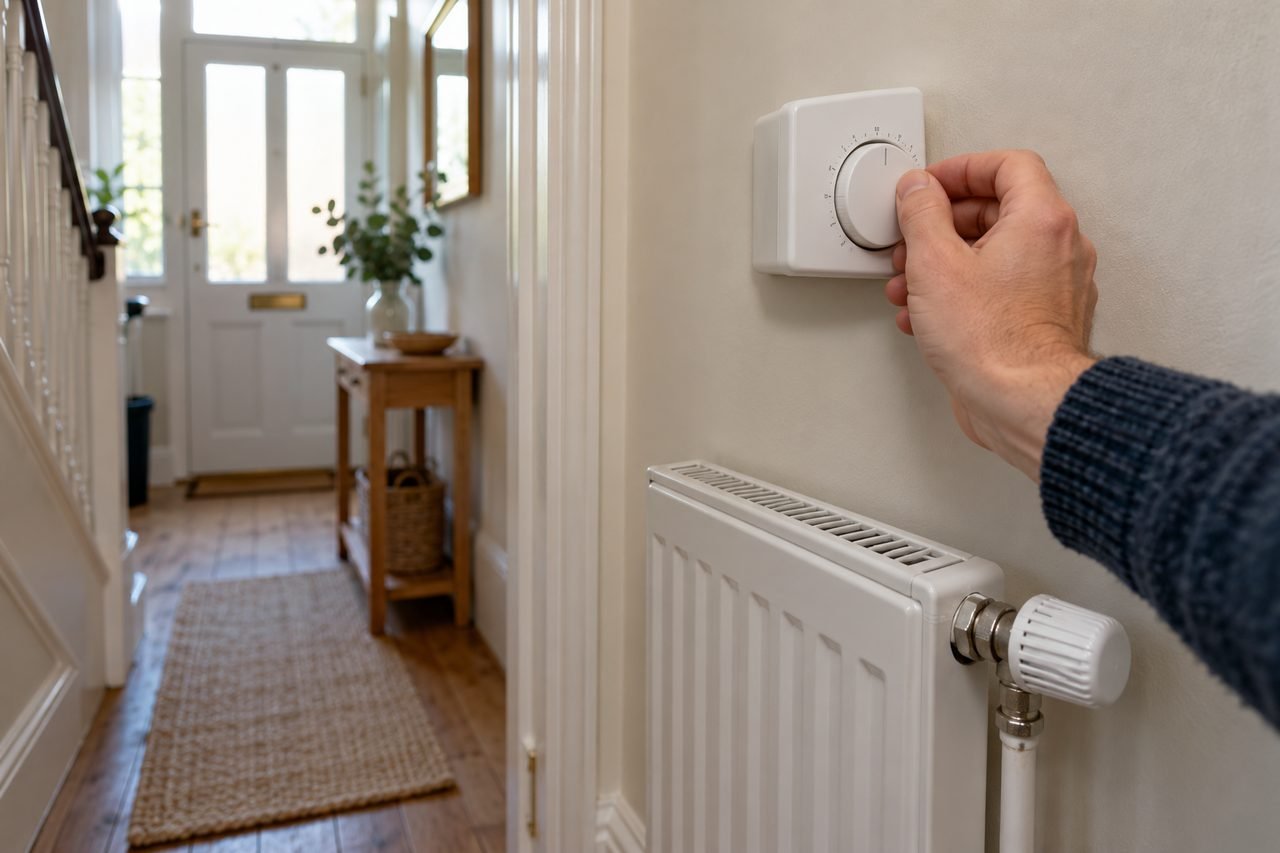
Heating controls for landlords decide what a rented home costs to run and how comfortable it feels. This page covers thermostats, hot water cylinders, first-time central heating, boilers, plumbing and smart meters. It shows which homes suit each upgrade, what it may do for the EPC and what funding exists.
Last checked: 21 October 2026.
Book a free retrofit assessment
What heating controls and hot water work covers
Controls are the parts that tell a heating system when to run and how hard. Hot water work covers the cylinder or boiler that supplies taps and showers. We deal with both, plus the pipework between them.
- Room thermostats, timers and thermostatic radiator valves.
- App-based controls that adjust several rooms.
- Insulation jackets and replacement hot water cylinders.
- A wet heating system fitted where the home has none.
- Boiler repair, boiler replacement and linked plumbing.
- Gas and electricity meters upgraded to smart ones.
Heating controls for landlords: which homes suit them?
Look first at homes where the controls are the weak point. Typical signs are a single dial in the hall, a timer nobody can set, radiators that are always hot or a cylinder that is warm to touch from outside.
Homes with only electric heaters or gas fires are different. They may suit a wet system fitted for the first time. A retrofit assessor checks the pipework route, the radiators needed and whether a heat pump would be a better fit. See our heat pump page for that route.
Choosing a landlord thermostat
A landlord thermostat has one job: let the tenant keep a comfortable home without wasting fuel. The tenant normally pays the bills, so the settings are theirs to control.
Simple thermostats and timers
A programmable room thermostat is cheap, reliable and easy to explain. It suits tenants who do not want an app. Check the display is readable and the batteries are easy to reach.
A smart thermostat in a let property
A smart thermostat learns routines and can be set from a phone. It also needs wi-fi and an account. Decide who owns that account before you fit it, and hand the details over at the tenancy start.
Radiator valves and zones
Thermostatic radiator valves let each room reach its own temperature. They help in houses where the back bedroom is always cold. Balancing the system first stops the boiler working harder than it needs to.
Hot water cylinder insulation and replacement
A tank of stored hot water loses heat all day. Hot water cylinder insulation reduces that loss. A fitted jacket or a modern pre-insulated cylinder both do the job.
Replace rather than wrap if the cylinder leaks, is badly scaled or is too small for the household. Your installer sizes the new one to the number of bedrooms and bathrooms.
First-time central heating, boilers and plumbing
First-time central heating means radiators, pipework and a heat source in a home that never had them. It is a larger job than a controls swap, so plan it between tenancies.
For existing boilers, repair is sensible while the unit is sound. Replace when parts are scarce or efficiency is poor. Any gas appliance work must be done by a Gas Safe registered engineer. Our electrical and gas safety page explains the yearly check.
Smart meters in rented homes
The government response on rented-home energy performance says a smart meter improves a property's smart readiness score on the new EPC. It also says tenants who pay their own bills can ask their supplier for a smart meter free of charge.
If a tenant declines and the home stays below the smart readiness standard, the policy lets the landlord register a third-party consent exemption. This is confirmed government policy, not yet law, as at 21 October 2026.
What these upgrades do for the new EPC
The new EPC puts fabric performance first, so controls alone will not carry a home to C. The government says landlords must meet the fabric standard, then either a heating system standard or a smart readiness standard of their choice. The numeric thresholds are not yet published.
Controls and smart meters support the second step. They are best treated as a low-cost addition to insulation, not a replacement for it. Our guide to improving an EPC rating shows the order.
| Upgrade | Best suited to | Landlord note |
|---|---|---|
| Programmable thermostat | Homes with a basic dial control | Quick fit, no app needed |
| Smart thermostat | Tenants who like app control | Agree who owns the account |
| Radiator valves | Houses with uneven room temperatures | Balance the system at the same visit |
| Cylinder insulation | Homes with a stored hot water tank | Replace the tank if it leaks |
| First-time central heating | Homes with electric heaters only | Plan for an empty property |
| Smart meter | Any home with a standard meter | Tenant can request one free |
Funding and VAT
Warm Homes: Local Grant in Greater Manchester does not pay for gas or oil boilers. It does cover other measures, so a controls upgrade may sit alongside funded insulation. Read our grants for landlords guide for who qualifies and the end dates.
HMRC says heating controls such as thermostats, timers and valves are zero-rated for VAT when installed in a home from 1 May 2023 to 31 March 2027. From 1 April 2027 the 5% rate applies.
What do heating controls cost?
Price depends on the home and the system already in place. Indicative price from £350 for heating controls (UK market research, 2026). This is not a quote: your written quote after a survey is the confirmed price.
You receive a written price after a site visit. We do not give fixed quotes over the internet.
How the work is done
- Visit: an assessor looks at the boiler, pipes, cylinder and controls.
- Plan: you get a short written list in priority order.
- Fit: the installer completes the work, often in a day for controls.
- Handover: you receive manuals, settings and the certificates for your records.
Adviser tip from a Retrofit Coordinator: do the controls and the radiator balancing in one visit. A smart thermostat on an unbalanced system hides the problem rather than solving it, and the tenant still feels cold in the far rooms.
Who delivers the work
Compliant Lets is a trading name of LAMTANS Holdings Ltd. LAMTANS Engineering Ltd carries out the installation and holds Gas Safe registration, along with PAS 2030, PAS 2035, MCS, TrustMark, ICO registration and RECC membership. Check the registers yourself: TrustMark, RECC, ICO, Gas Safe Register and Simply Certification.
Sources
- GOV.UK: Improving the energy performance of privately rented homes, government response, checked 21 October 2026
- GOV.UK: VAT on energy-saving materials and heating equipment (Notice 708/6), checked 21 October 2026
- GMCA: Warm Homes Local Grant, privately rented scheme, checked 21 October 2026
- GOV.UK: Your landlord's safety responsibilities, checked 21 October 2026
Designed & developed by LAMTANS Technologies LLC, USA — part of the LAMTANS Group
Frequently asked questions
Do landlords have to fit a thermostat?
A working room thermostat and timer is basic good practice in any gas-heated let home, and a smart one is optional. Your assessor will say what is missing.
Can a smart thermostat help an EPC?
It supports the smart readiness part of the new EPC, but the government has not published the scoring thresholds. Treat it as a supporting measure alongside fabric work.
Who pays when a tenant uses more heat?
The tenant pays their own bills in most lets. Good controls help them stay in charge of the cost. If bills are included in the rent, the landlord gains directly.
Is hot water cylinder insulation worth it?
It is one of the cheaper jobs. A cylinder that loses heat all day wastes fuel for the tenant. We check the tank and tell you whether a jacket or a new cylinder is sensible.
Can you fit central heating where there is none?
Yes. First-time central heating needs a heat source, pipes and radiators. We survey the home first and compare a boiler with a heat pump.
Can a tenant ask for a smart meter?
Yes. The government response says tenants who pay their own bills can request one from their supplier free of charge. The landlord does not install it.
Is this work covered by a grant?
Greater Manchester's Warm Homes: Local Grant excludes boilers but covers other measures. Funding depends on property and tenant, so we check at assessment.
How long does a controls upgrade take?
Controls often take part of a day. A new cylinder or first-time central heating takes longer. We confirm the time after the site visit.
Do you give notice to the tenant?
We arrange access through you or your agent. The tenant is told the date and the likely length of the visit beforehand.
Is the work VAT free?
Installing heating controls in a home is zero-rated until 31 March 2027, then 5% from 1 April 2027, according to HMRC. Check your own tax position with an accountant.