
Landlord kitchen refit: built to last between tenants
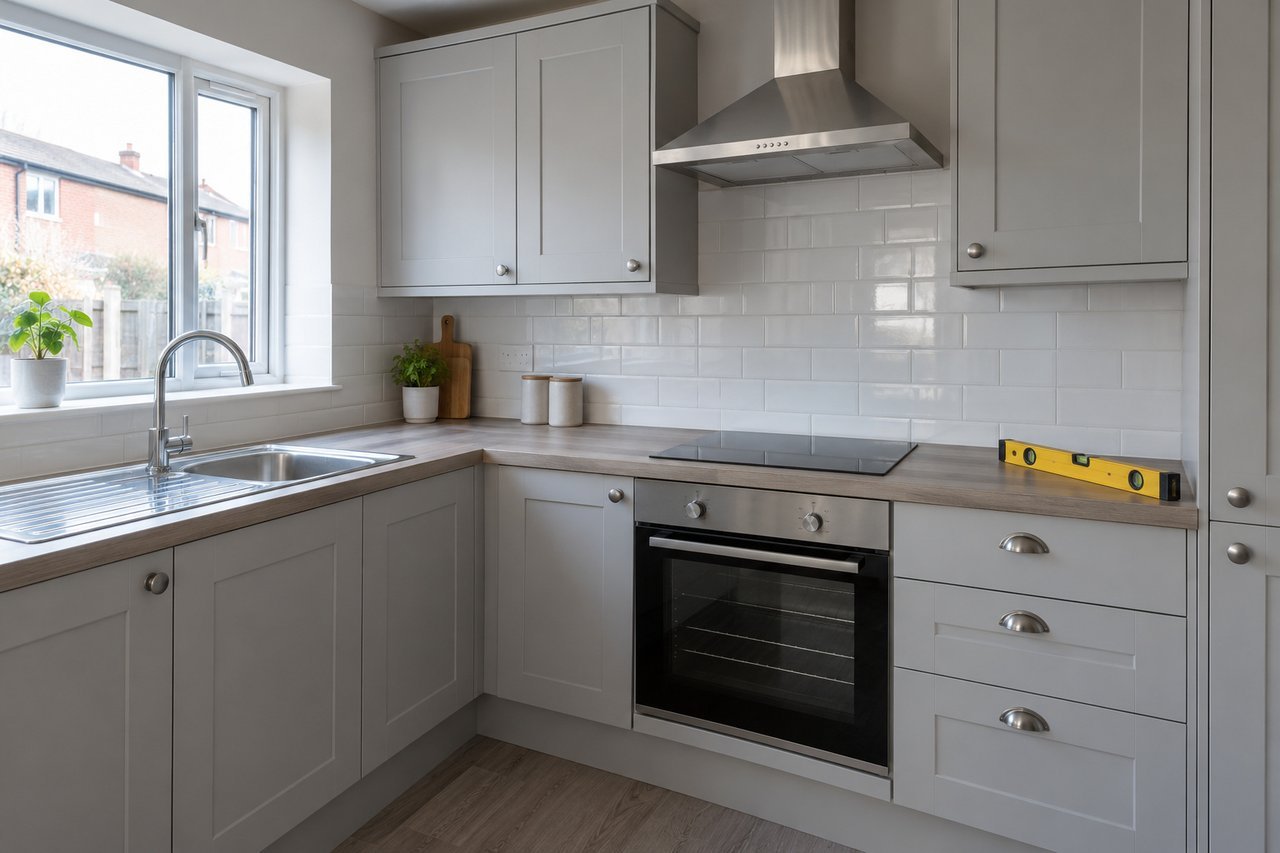
A landlord kitchen refit should survive years of daily use and pass a safety check first time. This page explains what to replace, how to protect gas and electrical safety, how to plan ventilation, and how a refit runs from site visit to handover.
Last checked: 22 October 2026.
Landlord kitchen refit: what is worth replacing
Start with what fails first. Hinges, drawer runners, worktop edges and the area around the sink take the most wear in a let home.
- Doors and drawer fronts, when the carcases behind them are sound.
- Worktops, especially near the hob and sink.
- Sink, taps and waste, where leaks have stained the units.
- Splashbacks and wall tiles.
- The whole layout, when it cannot be used safely.
A door-and-worktop update costs far less than a full refit. A survey tells you which one the room needs.
Rental kitchen worktops and units that survive tenants
Choose materials by wear, not fashion. Laminate worktops are cheap to replace in sections. Solid surfaces cost more but take heat and knocks better.
Units
Plywood or moisture-resistant carcases cope better with spills than basic chipboard. Soft-close hinges are optional. Strong standard hinges are not.
Surfaces
Pick finishes that wipe clean. Avoid deep grooves and open joints where grease collects. Seal every cut edge near water.
Kitchen electrical and gas safety: what must be certified
A kitchen refit often moves sockets, cooker supplies or gas pipes. Those changes are regulated. Electrical work in a home usually has to meet Part P of the Building Regulations. Gas work must be done by a Gas Safe registered engineer.
Landlords have separate duties. A gas safety check is needed every 12 months, and electrical installations must be inspected at least every five years. Our electrical and gas safety page explains both.
Kitchen ventilation: stop condensation at the source
Cooking puts a lot of moisture into the air. An extractor that vents outside, or a trickle vent that works, keeps the walls dry. Without it, mould follows.
Fit an extractor with a duct to the outside wall rather than a recirculating hood. Check the fan still works after the refit. Our damp, mould and ventilation page covers the wider picture.
Kitchen refit programme: from site visit to handover
- Visit: we measure, photograph and list the faults.
- Plan: you receive a written scope for each item, with prices.
- Strip out: old units, worktops and flooring come out first.
- First fix: plumbing, electrics and gas are run to the new layout.
- Fit: units, worktops, sink and appliances go in.
- Second fix and testing: connections are tested and certificates issued.
Most delays come from changes made after the order. Agree the layout and appliances before the strip out.
Alarms, lighting and layout checks
Plan the small safety items at the same time. Smoke alarms are required on every storey of a rented home. A carbon monoxide alarm is required in any room with a fixed combustion appliance, such as a gas boiler. Gas cookers are excluded from that rule.
Add good task lighting over the worktop and sink. Keep the cooker away from windows and curtains. Leave clear floor space in front of the oven door, so nobody has to reach across a hob.
Plan the kitchen with other work
Do the kitchen after any energy upgrades that open walls or floors. Draught-proofing, insulation and window work can disturb new tiles and paint. Our refurbishment page sets out the order for a whole property.
A new kitchen does not change the EPC by itself. Better lighting and a more efficient boiler can. The EPC C by 2030 rule is confirmed government policy, not yet law, as at 22 October 2026. See our EPC C 2030 guide.
Adviser tip from a Level 7 Senior Construction Manager (MCIOB): price the kitchen as a list of separate items, not one lump. You can then drop an item without re-pricing everything.
Who delivers the work
Compliant Lets is a trading name of LAMTANS Holdings Ltd. The kitchen work is carried out by LAMTANS Engineering Ltd, which holds Gas Safe registration and works to the Building Regulations. Gas and electrical changes are certified at handover.
Sources
- GOV.UK: Building regulations approval, checked 22 October 2026
- GOV.UK: Your landlord's safety responsibilities, checked 22 October 2026
- Gas Safe Register, checked 22 October 2026
Designed & developed by LAMTANS Technologies LLC, USA — part of the LAMTANS Group
Frequently asked questions
How long does a landlord kitchen refit take?
It depends on the size and whether services move. We give a programme with the written plan, after a site visit.
Can I refit between tenants?
Yes. A void gives clear access and avoids disruption. Our void turnaround page explains the lighter version.
Do I need a certificate for kitchen electrics?
Notifiable electrical work needs proof that it meets Part P. You should receive the paperwork at handover.
Who can move a gas pipe or hob supply?
Only a Gas Safe registered engineer. Always ask to see their card and check the register.
Will a new kitchen improve my EPC?
Not by itself. Cosmetic work does not change fabric performance, so pair it with insulation or heating measures.
Should I supply the appliances?
That is a choice for the tenancy agreement. Choose models that are easy to clean and easy to replace.
What if the kitchen has damp?
Find the cause before fitting new units. A leak or poor ventilation will ruin new carcases within months.
Can a letting agent order the work?
Yes. Agents can book a survey and approve a quote for a landlord. See our letting agents page.
Can I pay by finance?
Finance may be available through Ideal4Finance, subject to status. Ask us for the approved wording and terms.