
Landlord roofing services: stop the leak, protect the asset
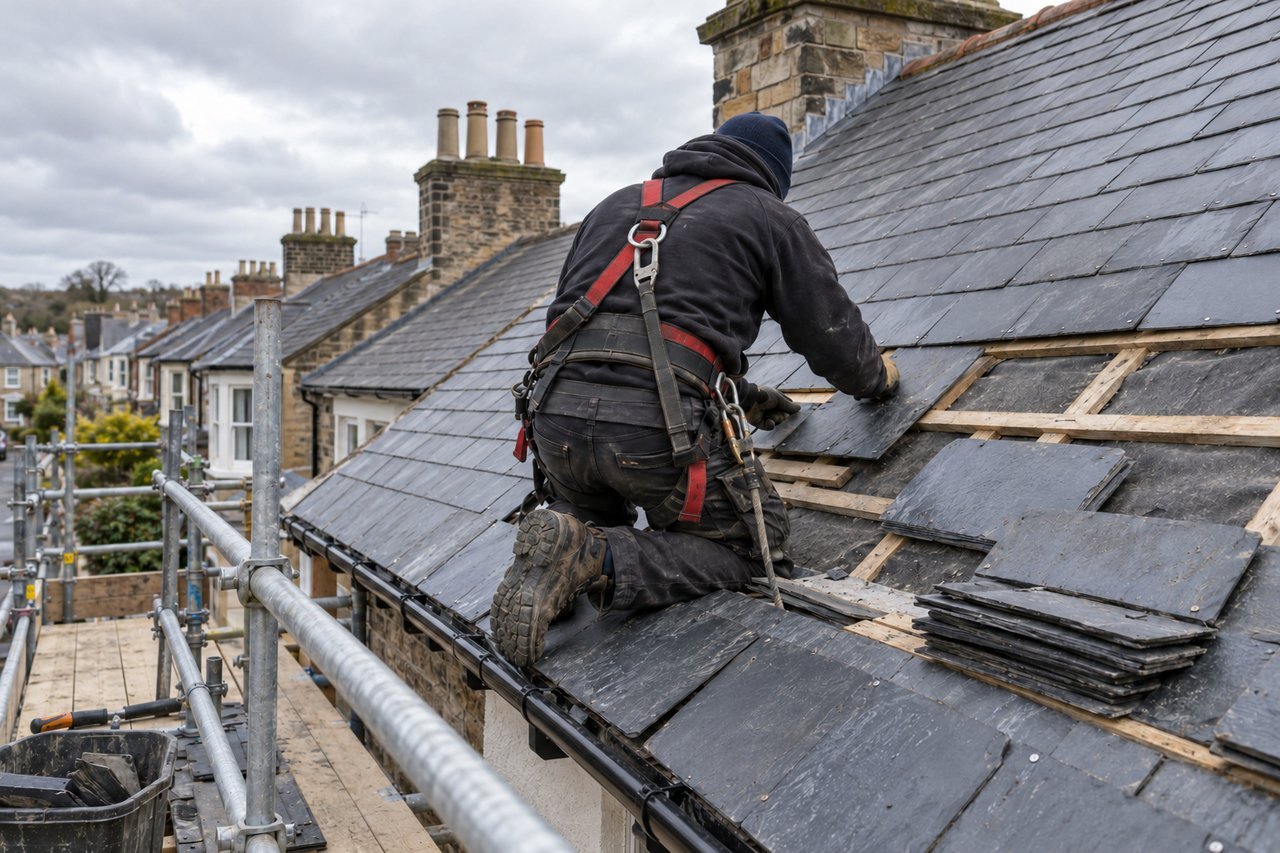
Landlord roofing services keep the weather out of a rented home and the repair bill small. This page explains your legal duty, how to inspect a roof, which repairs matter most, what a flat roof needs and how a roofing job runs safely.
Last checked: 22 October 2026.
Landlord roofing services: your duty to repair
For most tenancies of under seven years, the landlord must keep the structure and exterior of the home in repair. That includes the roof, gutters and external pipes. Section 11 of the Landlord and Tenant Act 1985 sets this out.
A leak left for months also becomes a damp and mould case. See our damp, mould and ventilation page for how the two link.
Roof inspection: what to look for
A roof inspection starts at ground level, then moves inside. Look from the pavement for slipped or missing tiles, sagging lines and moss. Check the loft for daylight, wet timbers and stains.
Outside
Cracked ridge tiles, failed pointing, blocked valleys and loose flashings are common. Look at chimneys and where the roof meets a wall.
Inside
Dark patches on rafters, damp insulation and a musty smell all point to a leak. Photograph them with the date.
Do not climb onto the roof yourself. Use a ladder survey, a drone or a qualified roofer working safely.
Landlord roof repair: tiles, slates and flashings
Most repairs are small. Replacing slipped tiles, re-bedding a ridge or renewing lead flashing costs far less than a new roof. A repair is the right answer when the tiles and timbers are generally sound.
A recovering or full replacement is right when many tiles fail, the felt has perished or the timbers are rotten. Ask for photographs of the problem, not only a price.
Flat roof replacement: what a good job includes
Flat roofs fail faster than pitched ones. Common coverings are felt, single-ply membranes and liquid-applied systems. The right one depends on the condition of the deck.
A proper job lifts the old covering, checks and repairs the deck, adds insulation and falls to the drainage, and finishes with edge details that shed water. Ask how water leaves the roof. Standing water shortens the life of any covering.
Roof work is regulated in many cases, especially if you add insulation. See our roof insulation page.
Gutters and fascias
Blocked or broken gutters send water down the wall. That leads to damp patches and rotten fascias. Clear them, realign them and renew failed joints.
Replace rotten fascias and soffits before painting. Check vents in the soffit stay clear, because the loft needs air movement.
Safe access and asbestos
Falls are among the most serious risks on any building site. Roof work needs scaffolding or edge protection for anything beyond a very quick repair.
Older roofs can contain asbestos cement sheets, soffits or flues. Do not drill, break or scrub them. Get a survey and use a licensed or competent contractor where required.
Adviser tip from a Level 7 Senior Construction Manager (MCIOB): take dated photographs before, during and after the work. They settle disputes with insurers, tenants and neighbours.
Roofing quotes: what to compare
Ask every roofer for the same things in writing: the scope, the materials, the access arrangements, how waste is removed and what is excluded. Prices only compare when the scope matches.
Ask whether the roofer holds public liability insurance and whether work is guaranteed. Keep the answers with the property file. A guarantee is only as good as the company behind it.
After a storm
Check the property within a day or two of severe weather. Look for tiles on the ground, hanging gutters and new stains in the loft. Ask the tenant to tell you straight away about any drips, and make it easy by giving them an email address for urgent repair reports.
Roofing with energy upgrades
Re-roofing is the best moment to add insulation. The roof is open and the cost of access is already paid. The EPC C by 2030 rule is confirmed government policy, not yet law, as at 22 October 2026. See our EPC C 2030 guide for the rule, and our loft insulation page for the measure.
Who delivers the work
Compliant Lets is a trading name of LAMTANS Holdings Ltd. LAMTANS Engineering Ltd delivers roofing and associated works, with written scope, safe access and photographed completion.
Sources
- Legislation.gov.uk: Landlord and Tenant Act 1985, section 11, checked 22 October 2026
- GOV.UK: Building regulations approval, checked 22 October 2026
- HSE: Asbestos in the workplace, checked 22 October 2026
Designed & developed by LAMTANS Technologies LLC, USA — part of the LAMTANS Group
Frequently asked questions
Who pays for a roof repair in a rental?
The landlord is usually responsible for the structure and exterior of the home.
How often should a roof be inspected?
Check it once a year and after severe storms. Check the loft at the same time.
How do I know if I need a new roof?
Widespread slipping, repeated leaks, perished felt or rotten timbers point to replacement rather than repair.
How long does a flat roof last?
It varies with the covering and workmanship. Ask the installer for the expected life of the system in writing.
Do I need building regulations approval?
Re-roofing and adding insulation can be notifiable. We confirm what applies after the survey.
Is asbestos a risk on my roof?
It can be on older roofs. Do not disturb suspect material. Get it tested first.
Can you repair roofs while the tenant is in?
Often yes. Roof work is mostly external, but we agree access to the loft in advance.
Will a new roof improve my EPC?
Not by itself. Adding roof or loft insulation at the same time can.