
Smart meters for landlords: what you can and cannot arrange
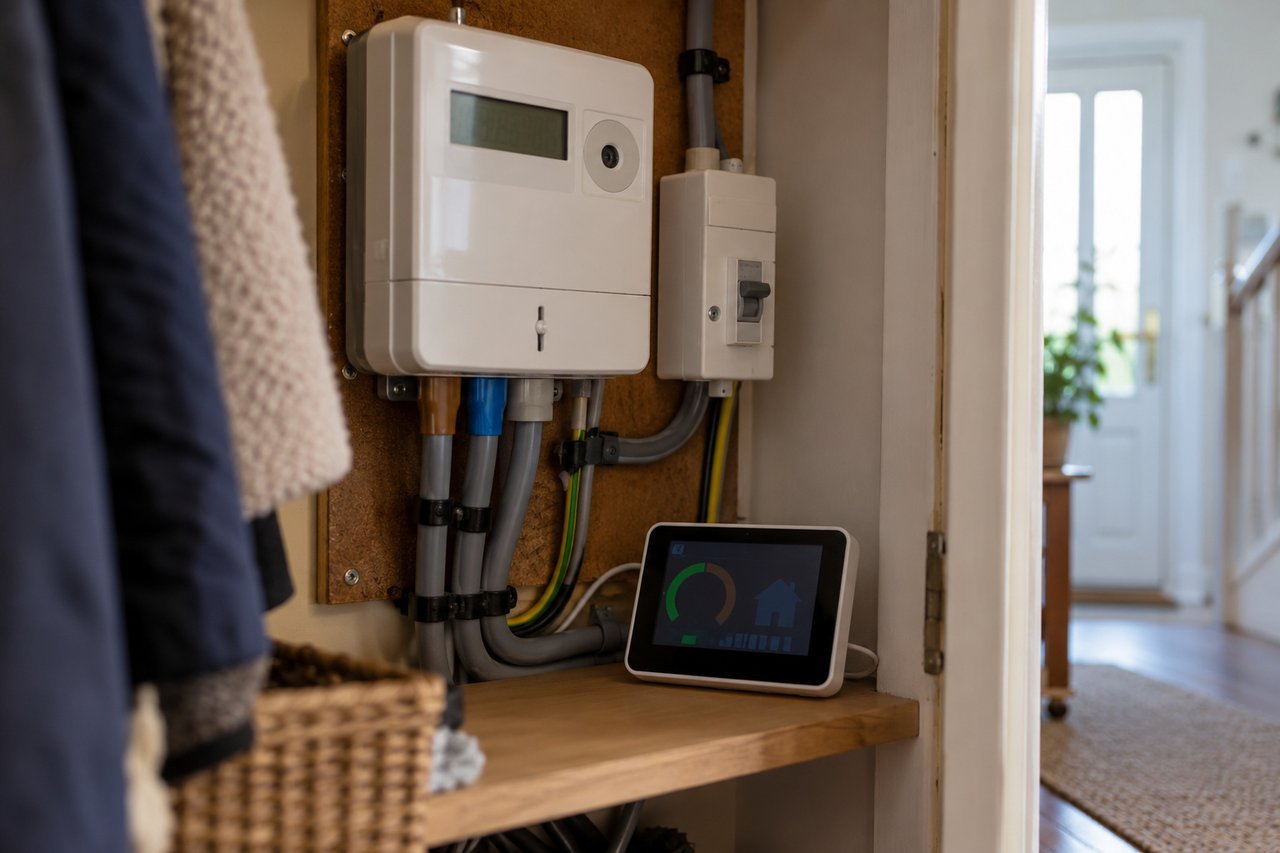
Smart meters for landlords raise the same questions every time: who asks for one, who pays and what happens between tenants. This page answers them, explains what a smart meter does for a rented home, and shows where smart controls help.
Last checked: 22 October 2026.
Smart meters for landlords: who can request one
The energy account holder asks the supplier for a smart meter. During a tenancy that is usually the tenant if they pay the bills. During a void, it is usually the landlord.
A landlord cannot force a tenant to accept a meter in the tenant's name. A tenant cannot be made to change supplier, but they can ask for the meter themselves. Suppliers install the meters. We do not install them, but we can help you plan the visit.
Who pays for a smart meter
Customers do not pay an upfront charge for installation. The supplier recovers the programme cost through bills. If a meter needs more work to make it safe, the supplier tells you before they proceed.
This is the same whether you are a landlord or a tenant. If a meter needs replacement because it is damaged, ask your supplier who bears that cost.
Smart meter for tenants: what changes for them
A smart meter sends readings to the supplier automatically and shows live use on a small in-home display. Bills are based on actual use, not estimates. That helps tenants see where the money goes and spot waste.
Tenants decide whether to accept one. Explain the benefits at the start of the tenancy, and respect their choice.
Empty property energy accounts: voids and handovers
Between tenants, the landlord or agent is responsible for the supply. Open an account in your name on the day the tenancy ends and take final readings.
- Photograph every meter on check-out and check-in day.
- Tell the supplier the move-out date and final readings.
- Keep a copy of the readings with the inventory.
A smart meter makes the final reading automatic, which removes a common dispute. Our void turnaround page shows where this fits in the routine.
What a smart meter does not do
A smart meter does not lower the bill by itself. It does not change the home's EPC. Insulation, heating and windows do that.
It also does not control the heating. For control you need a thermostat and programmer. See our heating controls and hot water page for the options.
Landlords with several properties
If you manage a portfolio, keep one register of meter types, locations and supplier account numbers. Note which homes have smart meters, which have traditional meters and which have prepayment meters. The register saves hours at every tenancy change.
Check access before the supplier visits. Meters in cellars, cupboards under stairs or shared basements can delay an install, so tell the tenant and supplier where to go. Clear the space and leave a key arrangement with the agent.
Smart thermostat: a better partner than a meter
A smart thermostat lets a tenant schedule and adjust heating from a phone. Landlords may like it for remote fault diagnosis and for protecting against frost. Choose a model that is simple to use, because complex controls get switched off.
Adviser tip from a Level 7 Senior Construction Manager (MCIOB): fit the thermostat where the tenant will actually live, usually the living room, and give a one-page guide in the tenancy pack. A control nobody understands gets set to maximum.
Common problems at tenancy change
Missing final readings, bills in a former tenant's name and meters that cannot be reached cause most disputes. Put the meter locations in the inventory with photographs, and give the incoming tenant the supplier's name and the opening readings.
Meters, EPC and the 2030 rule
The EPC C by 2030 rule is confirmed government policy, not yet law, as at 22 October 2026. A smart meter is not an EPC measure. See our EPC C 2030 guide for the measures that count.
Who helps with the work
Compliant Lets is a trading name of LAMTANS Holdings Ltd. Meters are installed by your energy supplier. LAMTANS Engineering Ltd can fit heating controls and plan access for the supplier's visit.
Sources
- GOV.UK: Get a smart meter, checked 22 October 2026
Designed & developed by LAMTANS Technologies LLC, USA — part of the LAMTANS Group
Frequently asked questions
Can a landlord ask for a smart meter in a let home?
Only the account holder can ask. During a void that is usually the landlord.
Do I have to accept a smart meter?
No. The account holder chooses.
Do smart meters cost extra?
There is no upfront installation charge. The cost is recovered through bills.
Will a smart meter improve my EPC?
No. EPC ratings reflect the building and its systems, not the meter.
What if the tenant leaves without a final reading?
Use photographs of the meter taken at check-out and send them to the supplier.
Who is responsible for energy bills during a void?
Usually the landlord or agent, until the new tenant takes over the account.
Is a smart thermostat worth fitting?
It can be, if the tenant finds it easy. A simple programmable thermostat also works.
Can you install the meter?
No. The energy supplier installs it. We can help with access and controls.